Abstract
Despite the ubiquity of consumer wearables, everyday health management remains fundamentally reactive, fragmented, and disconnected from clinical reality. Transforming passive physiological streams into an intelligent, trustworthy Personal Health Agent requires solving a core computational challenge: bridging raw continuous sensing with clinical ground truth, predictive physiological dynamics, and empathetic behavioral change.
In this talk, we present a unified paradigm for personal health intelligence that moves from continuous perception to counterfactual simulation and collaborative action. We begin by uncovering the hidden physiology within continuous sensor streams, demonstrating how wearable foundation models can detect silent cardiometabolic risks, such as pre-symptomatic insulin resistance, long before traditional laboratory markers shift. Yet, proactive care cannot rely on retrospective risk detection alone; an agent must understand how the body evolves, and how feasible and impactful potential behavior changes are. We show that aspects of human physiology can be modeled as an action-conditioned dynamical system, a sensor world model, capable of simulating multi-week physiological trajectories and projecting how candidate behaviors in sleep and exertion perturb an individual’s future health state. Finally, we demonstrate how these perceptual and predictive engines can be synthesized into an interactive multi-agent architecture. By decoupling statistical time-series reasoning, evidence-based clinical synthesis, and motivational health coaching into specialized collaborating agents, we close the loop between continuous sensing and sustainable behavior change, laying the scientific foundation for an agentic partner in lifelong health.
Bio
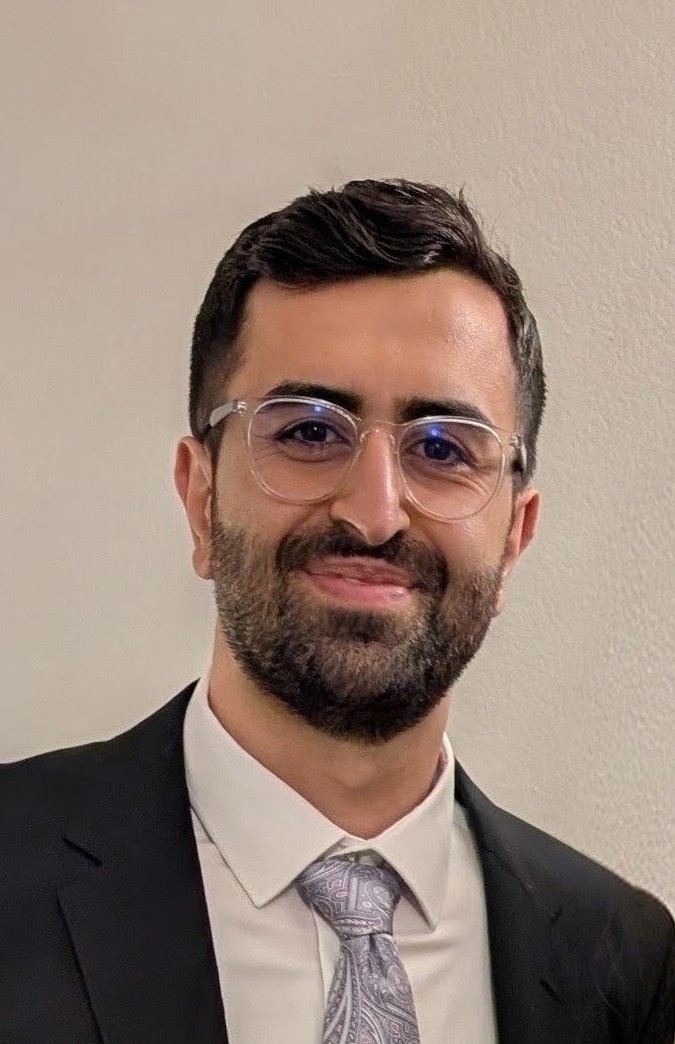
Dr. Ali Heydari is a Senior Research Scientist at Google Research, where his work centers on Health AI, foundation models for health data, multi-agent systems, and agentic self-improvement for scientific discovery. The goal of his research is to bridge breakthroughs in foundational models, including LLMs, with mathematical modeling and clinical data to develop scalable and accessible agentic systems for improving health outcomes. Prior to joining Google, Dr. Heydari was a National Institutes of Health National Research Service Award (F31) fellow at the University of California, Merced, where his doctoral research focused on developing deep learning and numerical methods for modeling complex biological systems.
At Google Research, Dr. Heydari has led efforts in personalized health intelligence, notably serving as a lead author of The Anatomy of a Personal Health Agent, a framework that couples specialist agents for wearable sensor analysis, clinical domain reasoning, and behavioral health coaching. This work laid the foundation for the Google Health Coach in the newly launched Google Health app. His broader research contributions include work in the first-of-its-kind insulin resistance phenotyping from wearables, wearable foundation models such as Sensor World Model (SensorWM) and Sensor Foundation Model (SensorFM), adaptive optimization algorithms (SoftAdapt), and generative deep learning architectures for computational biology.